When I was teaching creative writing in the prison, I wanted to do something special for my students for the holidays. Christmas was only days after our next class, but I was forbidden to bring cookies or candies inside, for security reasons. How could I help these men anchor within themselves a sense of the true meaning of the holy days, especially when not all were Christian, but Jewish and Muslim, as well? The day of class arrived and still I had not solved my dilemma.
And then, it came to me: it was Winter Solstice! The day when the Sun reaches its most extreme southern position, and the shortest day of the year. For several years I had been telling myths to my students and they always received these oral offerings with an intense, hungry, listening silence. I knew that they were being fed at the deepest levels by these archetypal accounts. So I would tell them a story that could unify all their varied belief systems: the return of Light after darkness. This theme would have special meaning for them, I reasoned, as captives of a miserably dark system.
I went to work prepared to break the law. In my coat pocket was secreted a small, illegal, but precious gift. The class was large, that wintry evening, and their energy was intense but subdued. The holidays were always a hard time for them, away from their families, away from the radiance of festivity and joyous communal celebration. As always, they asked that the classroom lights be turned off, so that only the yard lights filtered in through the high, clerestory windows. They lived 24 hours a day drenched in harsh prison lighting and one small gift I could give them, each meeting, was to allow them this softening of the environment.
In this dim atmosphere, I began class by explaining how much I wanted to bring something special to them for the holidays, and how the usual gifts were forbidden. Slowly, I eased into the realm of spirit, keeping my voice low, waiting for the moment when their rapt, listening hunger crystallized in the room.
Our ancestors, I explained, from times long before the advent of our present-day religions, had celebrated the cycles of the seasons and the wheeling of the stars in the heavens. And tonight was one of the most sacred of holy days for those ancient people – the shortest day of the year.
I invited them to imagine how, in those pre-scientific times, it might have seemed to those people, as the days grew shorter and colder. What if this trend never stopped, but continued until all was endless night? The terror of such a possibility must have been a leaden darkness in their hearts. So, to ward off this apparent inevitability, rites were performed; prayers were spoken; sacrifices were made. This day, Winter Solstice, marked the profundity of despair and the dawning of hope because, surely as the Sun rises in the morning, the very next day was longer than its predecessor. Light was returning to the world!
It must be like this for them, I said. Their time in prison was a long, cold diminishing of the light, and perhaps it seemed as if they might never be done with it; that it would grow more shadowy and more intensely isolating until their lives were obliterated in endless darkness. So, tonight, we were going to create a ritual, just as our ancestors had done before us, to affirm the return of Light after darkness.
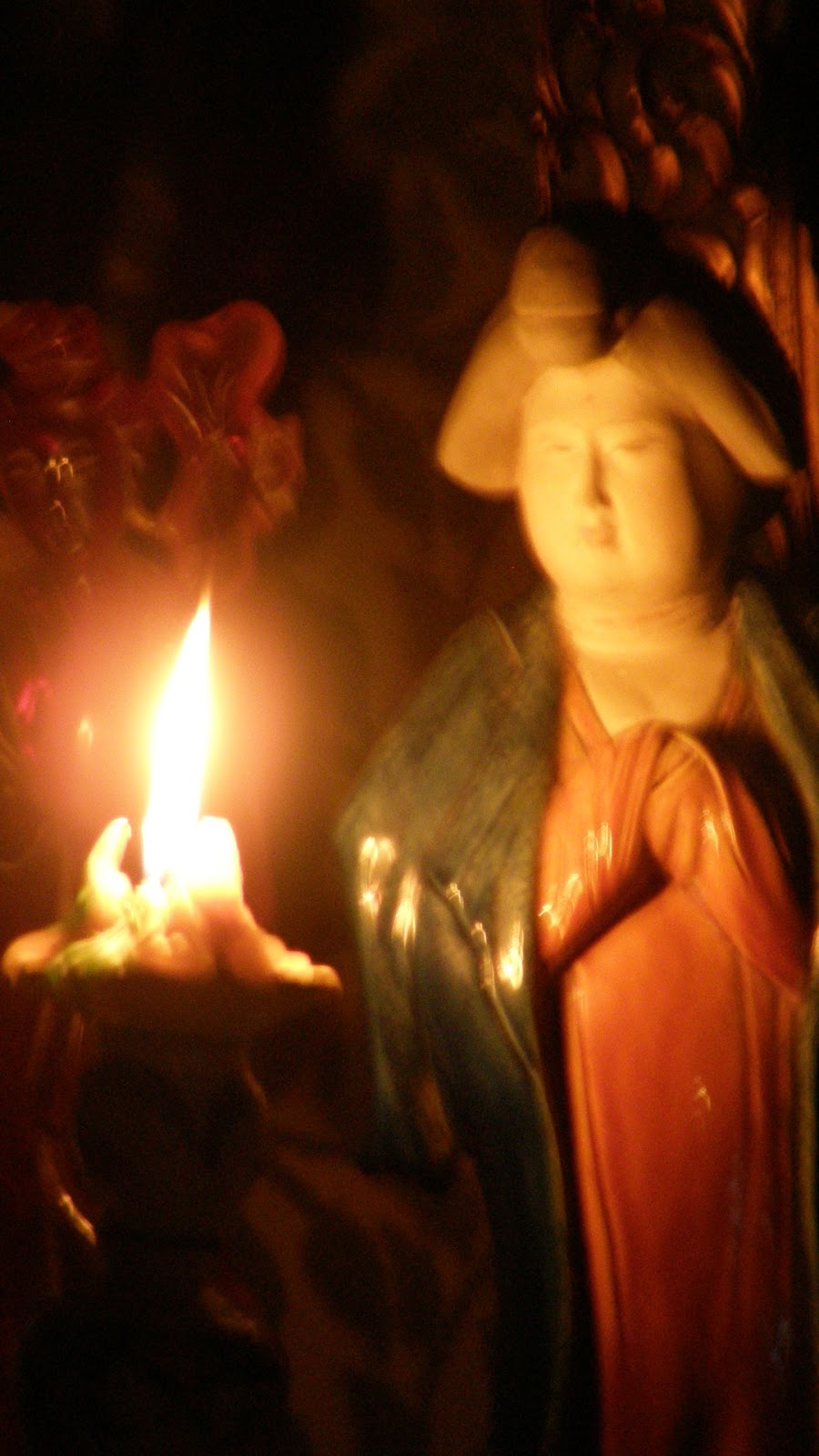
By this time, the room was sunk in an umbrous hush. The men, lulled by my voice, were sinking slowly into their pain and loss, their sense of entrapment, of being enclosed in darkness. This was the time to reveal my gift. I reached into my coat pocket and withdrew the stub on a votive candle, and a single wooden match. Slowly, ceremoniously, I struck the match and lit the candle. All eyes were on the lambent flame as it flickered, then rose up, like a single teardrop of fire.
I glanced around the circle of faces, black, brown, white, as the single flame’s chiaroscuro etched their faces with both grief and hope. Not a few sparked with the glint of tears. The banal and lifeless room disappeared and its energy became thick and warm, as surely as if we were a clan safely gathered deep in a cave around a sacred fire.
Almost in a whisper, I invited them to take out their notebooks and write about their personal darkness and what the return of the Light might look like for them. Without a word, moving cautiously, as if not to rupture the fragility of the holy moment, this usually rambunctious group opened their books and began to write. Often, they would stop to gaze at the flame in the center of the table, then dive again into writing.
We had been immersed in this sacred space for perhaps half an hour, when one of the men suddenly hissed, “Cops!” Without an instant’s hesitation I swiped the candle from the table. Hot wax cascaded over my hand, searing my skin. Not a second later, two correctional officers stepped through the classroom door.
I tucked my throbbing, wax-coated hand inside my jacket and turning to them with my most beguiling smile said, “Good evening, gentlemen,” praying that they would not smell candle smoke.
They, however, were standing in astonished confusion, staring around the room at my quiet students, who looked up at them briefly and then continued writing. I don’t know what those two officers expected, as they snuck down the long hallway, holding their keys against themselves, to keep them from jingling. An orgy? A drug meet? Surely, the silence of my classroom must have suggested something quite other than what their surprise visit revealed: a quiet circle of men, intensely writing.
Perhaps, too, the atmosphere of the room, which I can only describe as liquid love, disconcerted them. “Would you like to join us?” I asked sweetly. But they were already backing out of the room, a comedic embarrassment close to panic written on their faces.
I used to think, sometimes, that an angel with a fiery sword stood outside my classroom, protecting us, allowing us to build an atmosphere in which love and the affirmation of our humanness could well up. Certainly, that Winter Solstice night was one such occasion. As I peeled the now hardened red wax from my hand and made an inane comment about almost being caught red-handed, the men and I exchanged knowing smiles. The candle was back in my pocket, but we had Light in our hearts that no short and icy day, no correctional officer, no prison, could extinguish.